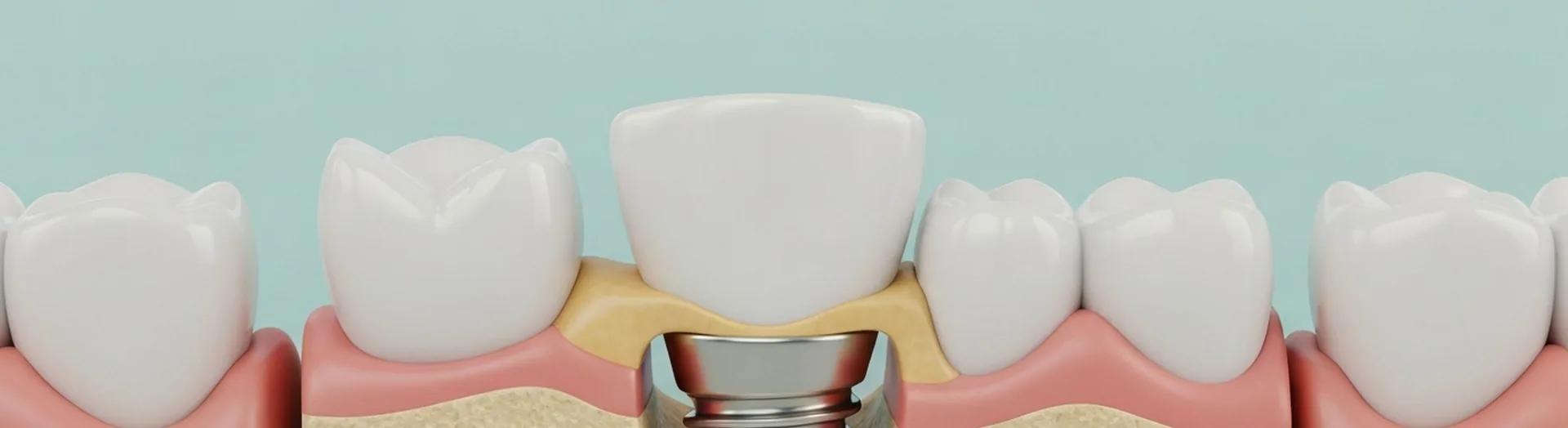

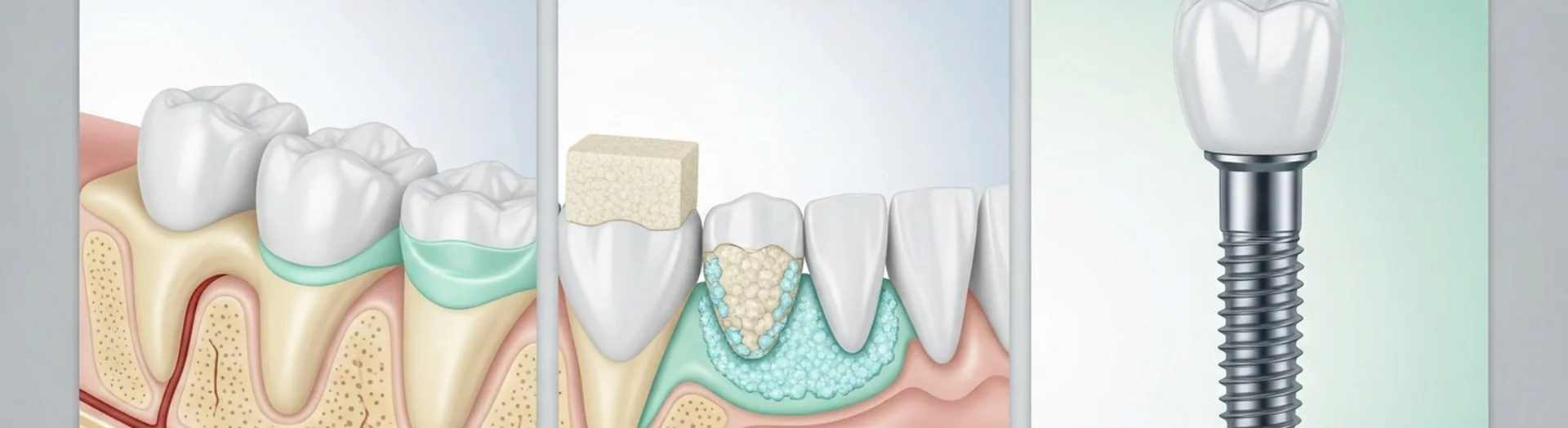
Step-by-step illustration of a bone graft

Bone Grafting: The Basis for a Stable Implant

A prerequisite for the long-term success of an implant is normal wound healing and a sufficient amount of jawbone. If the jawbone is not loaded - for example after tooth loss that occurred some time ago - it recedes. The result: insufficient substance for a stable implant bed.

We determine the available bone volume precisely using the 3D images from our digital volume tomography. Even with insufficient bone volume, help is available - depending on the extent of bone loss, different procedures are used.

The entire spectrum of bone augmentation

Depending on your starting situation, we choose the right procedure for you.

Filling a bone defect with substitute material

Bone Substitute Materials

For smaller deficits, we fill the defect directly during implantation with bone substitute material, often supplemented with the patient's own bone chips.
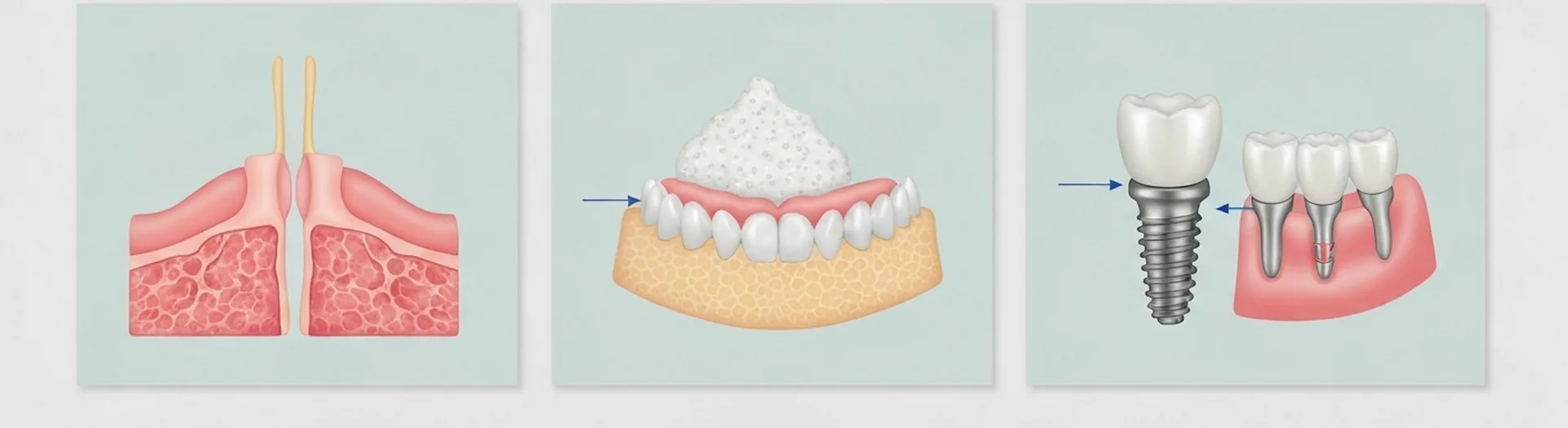
Cross-section of an implant in the augmented jawbone

Patient's Own Bone

For larger deficits or severely atrophied areas of the jaw, we rebuild the bone using the patient's own tissue from the jaw area.
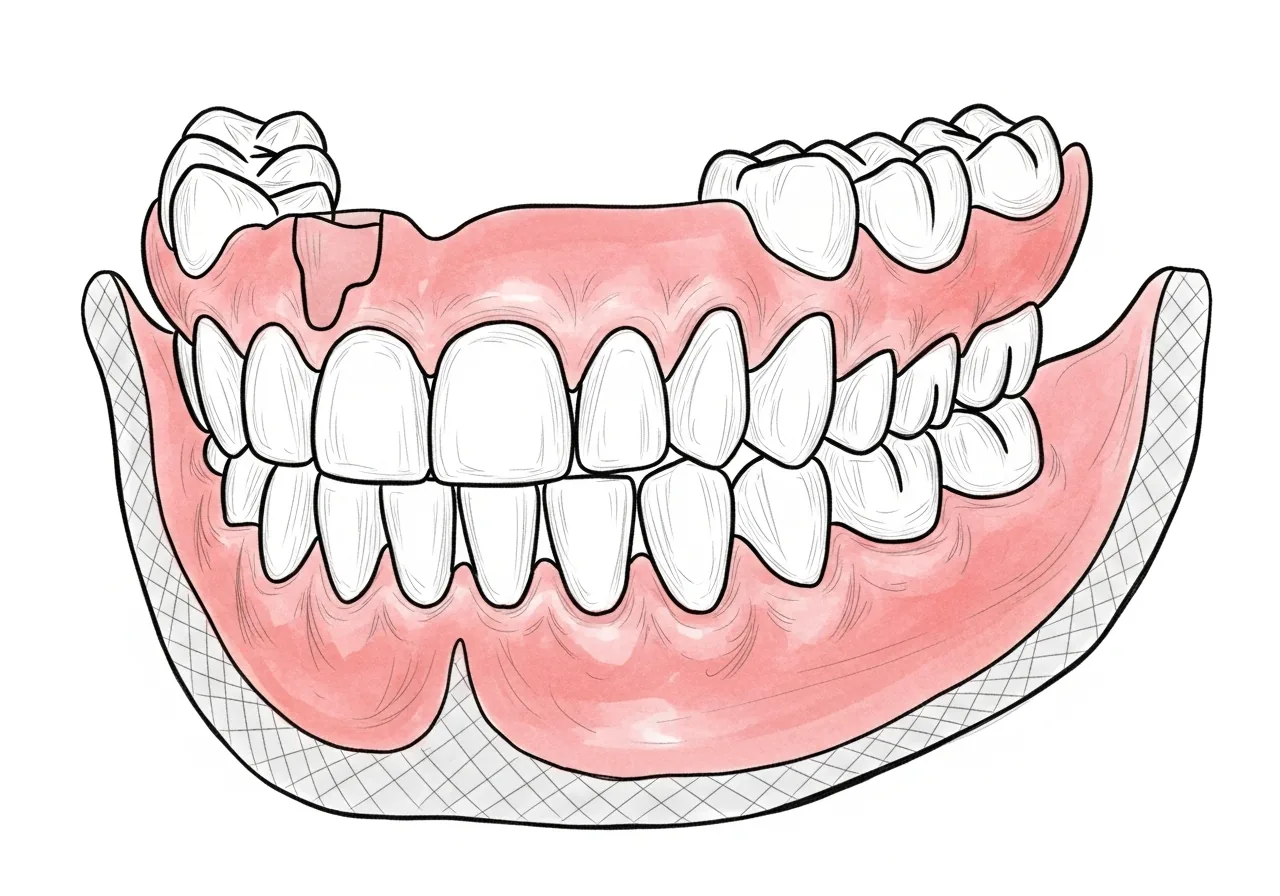
Schematic illustration of a narrow jaw ridge

Bone Splitting / Bone Spreading

For very narrow jaw ridges, the bone is gently widened or split - often entirely without additional bone removal.
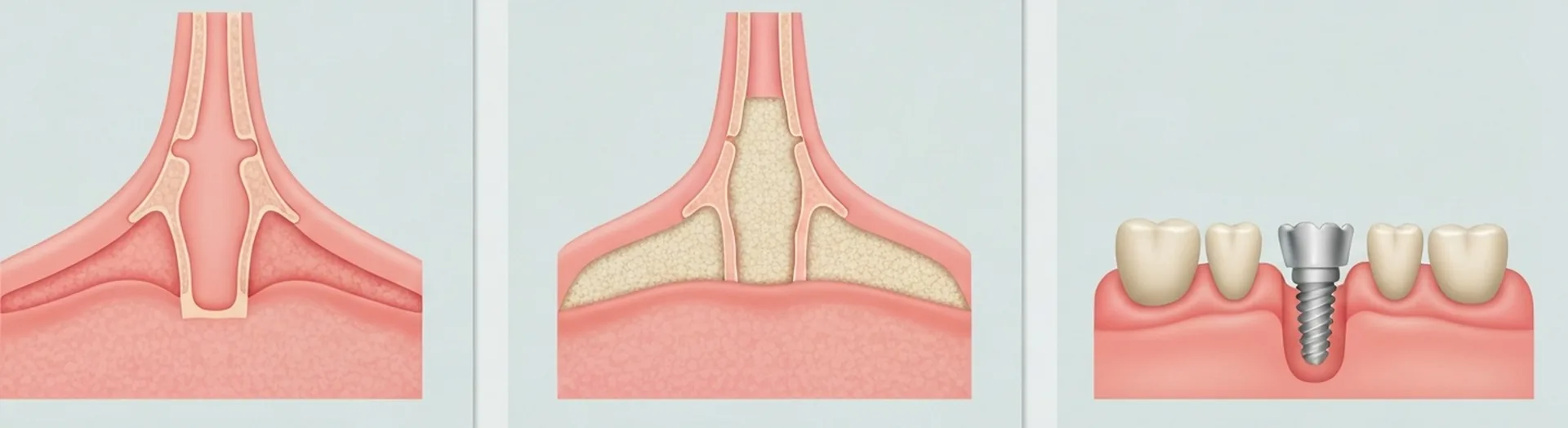
Illustration of a sinus lift in the upper jaw

Sinus Lift

If there is little bone volume in the upper jaw, we raise the floor of the maxillary sinus, creating space for sufficient bone.

The Most Important Facts at a Glance

  • A stable implant requires sufficient jawbone - if this is lacking, a bone graft may be necessary.
  • For smaller deficits, bone substitute material inserted directly during implantation is often sufficient.
  • For greater bone loss, the patient's own bone from the jaw area can be used.
  • Bone splitting and bone spreading widen a jaw ridge that is too narrow, often without additional bone removal.
  • During a sinus lift, the floor of the maxillary sinus is raised to create enough bone in the upper jaw for an implant.

Frequently Asked Questions

When is a bone graft necessary before implantation?
A bone graft becomes necessary when the existing jawbone is not sufficient for a stable implant bed, for example after prolonged toothlessness or significant bone loss. Whether and to what extent a graft is necessary is determined in advance with 3D diagnostics.
Is a bone graft painful?
The procedure is performed under local anaesthetic, if needed also with sedation, and is generally well tolerated. Temporary swelling may occur after the procedure.
What is a sinus lift?
During a sinus lift, the floor of the maxillary sinus is raised and filled with bone or bone substitute material. This procedure creates the basis for a safe implantation when bone volume in the upper jaw is limited.